
No time to think, only to do
The calendar fills with meetings and firefighting, and the strategic thinking that decides whether any of it matters gets nothing.
Positioning, strategy and the change of direction nobody saw coming all need new ideas. Creaocity keeps you practising, even in the weeks when you're only doing.
The calendar fills with meetings and firefighting, and the strategic thinking that decides whether any of it matters gets nothing.
The category is crowded and the pitch reads the same as three competitors. Differentiation is a creative problem before it's a marketing one.
Pattern recognition from your last company is an asset until it becomes the only pattern you can see.
Anyone can build and launch quickly. The hard part is deciding what's worth building at all.
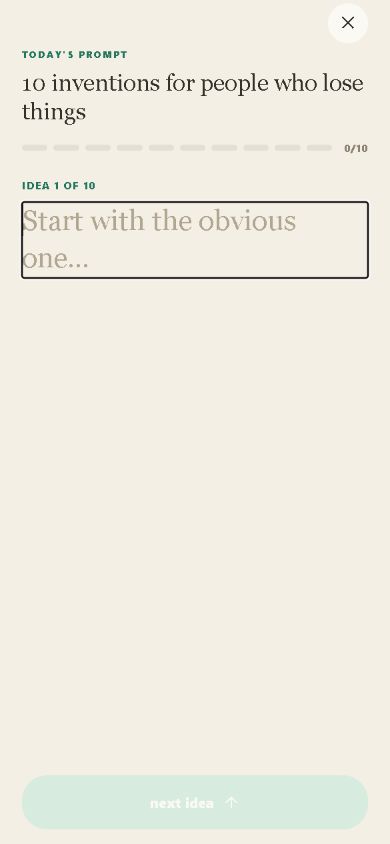
From the app's Dailies. The first few answers are the obvious ones. The last few are usually the good ones.
Ten businesses you could start with a hundred pounds.
0/10founding prices
Creaocity is coming to iPhone. Leave your email and we'll tell you the day it's out.
Yes. Email support@creao.city with how many people need it and we'll set your team up on one plan. See the Teams page for more.
That's fine. The practice is built for consistency over duration — three focused minutes most days beats an hour once a month, and the app is designed around that.
No. It does not hand you lists of businesses to build. It trains the underlying moves — noticing assumptions, reframing problems, generating alternatives, and connecting distant inputs — that improve the decisions only you can make.
Positioning, product direction, go-to-market ideas, naming, strategic options, and difficult decisions with no obvious answer. In each case, the value is seeing more than the default route before you commit.
Yes. A shared exercise can give a planning session more varied starting points before discussion narrows them. Each person thinks independently first, which helps the loudest early idea avoid becoming the only idea.
Ideas for meals, play, stories and weekends.
forGet started on the blank page and unstick the middle.
forMore ideas, further from the obvious.
forFresh angles for essays and better questions.
forGet out of your usual patterns and finish more songs.
forIdeas for your next piece and a reason to keep making.